When it comes to food blogging, recipe ratings and comments can be powerful signals—both for convincing new visitors to try a recipe and for ranking higher in Google’s search results.
But a lingering question persists:
Does Google view star-only recipe ratings (i.e., ratings without a written comment) as less helpful than ratings with full reviews?
To explore this, let’s look at two recipes that appear to have plenty of user ratings but differing fortunes in search rankings.
Specifically, we’ll discuss why one page (Site #1) sits comfortably at #1 in Google, while the other (Site #2) doesn’t rank at all—even though the latter boasts a huge number of star ratings and 135 comments (albeit without star ratings attached).
The Two Sites In Question
- Site #1
- Ranking: Sits at (or near) #1.
- Ratings: 574 total, all 5 stars.
- Comments: Of those 574, 531 are star-only (no text).
- When you look at the rich results for the site though, only 5 reviews come through with review snippets.
- Site #2
- Ranking: Does not rank at all for the same keyword (it used to, but not anymore).
- Ratings: 2,852 total, averaging ~4.48 stars. Of these, 2,850 do not include a written review—just the star rating.
- Additional Comments: There are 135 comments on the page, most positive, but as I said, only 2 of these 135 include a star rating and show up in review snippets on rich results.
Right away, you may find it odd that a page with nearly 3,000 star ratings and 135 positive comments fails to rank, while the other page with fewer total ratings (and mostly star-only) outranks it.
Is Google ignoring star-only ratings? Or is there more to this story?
Stick with me and let’s see if my theory has legs to stand. For the TL;DR, you can jump to my theory here.
What Google Has Said About “Helpfulness” and Reviews
Although Google’s ranking algorithm is highly complex and ever-evolving, the company does emphasize a few key principles in its official guidelines:
- E-E-A-T: Experience, Expertise, Authoritativeness, and Trustworthiness. Google’s Search Quality Rater Guidelines emphasize that genuine, valuable content—and user feedback—demonstrates real-world trust and authority.
- Helpful Content & Authenticity: Google has repeatedly stated that content must be created to help or inform users, rather than simply to rank for keywords. A page with dozens or thousands of star ratings but little substantive user feedback could be viewed as less “helpful” than one with more in-depth comments or thorough content.
- Structured Data & Review Snippets:
- Properly implemented structured data (Recipe schema) can show star ratings right in the SERPs, which may boost click-through rates.
- Google has cracked down on spammy or fake reviews in the past. This article from Search Engine Land talks about that effort in detail. so it’s not just the raw number of stars but also authenticity and consistency that matter.
Possible Explanations for the Ranking Discrepancy
- Domain Authority & Backlink Profile
- Even if Site #2 has significantly more star ratings, Site #1 might have a stronger backlink profile or overall domain authority. High-quality backlinks are often key to ranking well on Google.
- Quality of Engagement (vs. Quantity)
- While Site #2 has more total star ratings, are these visitors staying on the page, leaving detailed feedback, or browsing other recipes?
- Site #1 might be better at encouraging users to click around, print the recipe, sign up for newsletters, or read multiple pages—sending positive engagement signals to Google.
- Nature of Comments
- Site #2 does, in fact, have 135 positive comments, but only 2 of these are tied to a star rating. Meanwhile, Site #1’s star ratings might be attached directly to the recipe, reinforcing structured data that signals user satisfaction.
- Additionally, the comments on Site #2—despite being positive—may not include keywords or details that Google’s algorithm interprets as deep, helpful feedback. The average length or specificity could matter.
- Content Depth & Presentation
- If Site #1’s recipe post includes thorough cooking instructions, step-by-step photos, notes on variations, or personal anecdotes, it could appear more “useful” to Google. The overall user experience—page speed, mobile-friendliness, layout—also influences rankings.
- On-Page SEO Factors
- Are both pages equally optimized for the term “Mexican Street Corn”? The page structure, meta tags, headings, internal links, and other SEO factors may simply be stronger on Site #1.
Why I Think Site 1 Ranks Higher Than Site 2
I’m gonna call this the Dark Horse.
In marketing, there is a form of “proof” of trustworthiness called “sheer numbers.” Many searchers can be convinced to use trust something by simply showing the sheer number of people who have also done it or used it (even if they didn’t leave a review).
Imagine you are looking for website designs for inspiration. You go to the SERPs and you click on a result and the first thing you see on the page is information like this:
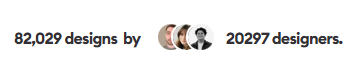
The average visitor will think “wow, there’s a lot of people using this, maybe I should too.”
The same thing happens in our brains when we are looking for a restaurant to eat at. We go to Google, search for “italian restaurants near me” and we start looking at their reviews. What do you think is going to happen if we see a 5-star rating with 574 ratings? We’re gonna go eat there because we want to see what all the hype is about!

So, when Site 1 pops up in the SERPs, people click simply because of the sheer number of 5-star ratings. Once they click, Google starts measuring what the visitor does on the site.
- How much time is the visitor spending on the site?
- What actions are they taking on the site?
- Did the user return to the search results?
Most visitors are probably going to Jump to Recipe (I know y’all hate the hear that). Once they are the recipe, Google is asking this question:
- Is a significant event occuring?
A significant event is an action a site visitor takes that is critical to the success of the website. This action tells the alogrithm the users query was satisfied.
In this post, I talk about all the actions a visitor can take on a food blog that can be considered “significant” or critical to the success of the website. Be sure you are optimizing your site so that it’s easy for visitors to take these actions!
Site 1 User Journey
Visitor goes to SERPs > Types keyword > Skims SERPs > See’s Site 1 with 574 5-star ratings > Trust is built by sheer numbers > Visitor clicks > Lands on page > Visitor clicks “Jump to Recipe” > Visitor skims the recipe.
Now, I’m going to interject here because there is another question the visitor has that is inferred when they start skimming the Recipe Card. Can anyone guess what that might be? How about, “Do I have all of these ingredients?”
So, let’s look at what the whole user journey looks like.

Good Outcome A
If the user has all of the ingredients, they are probably going to take an action at this time that could be considered significant for the blog.
- Spend a much larger amount of time on the page as they cook the recipe
- Print the recipe
- Share it with someone to see if that looks good for dinner tonight
- Pin it for later
- Screenshot it and save the recipe card to their photos (this is what my wife does, lol)
- When I saw her do it once, I asked her “why?” She said, “I don’t wanna have to fight all of these ads as I try to cook this recipe and the page keeps jumping as another ad loads.” That answer was exactly why I wrote this post about “how many ads should a food blog have?”. You can read it here.
Bad Outcome B
Regardless of if the user have all of the ingredients or not, if the visitor return to the SERPs to continue to skim, that’s still going to negatively affect your rankings because Google is likely to assume the searchers query wasn’t fully satisfied.
- Spent a lot of time on the page
- Didn’t return to the SERPs
Both of those signals tell Google that the users query was satisfied (cha, ching!). Site 1 is going to continue to rank higher simply because of a 5-star rating and the sheer number of 574 ratings that builds trust with searchers and makes them click.
Site 2 User Journey (even though we probably don’t even need to look at it, but here we go)
Visitor goes to SERPs > Types keyword > Skims SERPs > See’s Site 1 5-star rating out of 574 reviews and sees Site 2 with 4.5 stars out of 2,851 reviews > Trust is built by sheer numbers > Visitor clicks Site 1.

Does Google Devalue Star-Only Ratings?
Given these two examples, it’s tempting to think that Google might be ignoring “star-only” ratings as unhelpful content. In truth:
- Google looks at hundreds of ranking signals. Star-only ratings are likely just one data point, and they may not outweigh more critical factors like domain authority, content depth, structured data implementation, or user engagement metrics.
- A large volume of uniform star ratings (like all 5-stars) can raise suspicion of inauthenticity. Google’s spam systems may discount these if they appear unnatural. Unnatural star ratings can come with frequency. This is a popular thing that happened with link chains.
- Text-based feedback (i.e., comments) generally offers more valuable user insights—both for Google’s understanding of E-E-A-T and for readers actually deciding whether to try the recipe.
Still, the presence (or absence) of comments alone is unlikely to completely dictate your ranking. It’s a piece of the bigger SEO puzzle.
Takeaways for Food Bloggers
- Encourage Detailed Comments & Ratings Together
- WP Recipe Maker requires a comment now for all star ratings on their recipe cards. To increase engagement, try to encourage people to leave a star rating with a comment by prompting them with a question: “What did you think?” or “Did you add your own twist?” This may lead to more robust feedback that both humans and algorithms find helpful.
- Ensure Proper Structured Data Markup
- Double-check that your schema is correctly implemented so that Google can accurately read and display those ratings.
- Optimize for User Experience
- Make it easy to navigate, read, and leave feedback. Minimizing friction can significantly improve the quantity and quality of user-generated content.
- Cultivate Overall Site Authority
- Continue to build quality backlinks, produce high-value recipes, and engage your audience across platforms. A healthy domain authority can make a big difference in where you rank.
- Focus on Genuine Helpfulness
- If your content is created with genuine intent to inform and engage, you’ll likely see positive SEO benefits over time because your content is satisfying searchers questions. Track your bounce rate with a software like Microsoft Clarity. Google’s emphasis on “helpful content” isn’t going away; lean into it.
In the curious case of two recipe pages—one ranking #1 with mostly star-only ratings, and another not ranking at all despite thousands of star ratings and 135 positive comments—it’s clear that simply having a large volume of star ratings does not guarantee strong visibility in search results.
Google’s algorithms weigh numerous factors, from domain authority to user experience to content quality and structured data implementation. While star-only ratings might not inherently be penalized, they may offer limited “helpful” signals compared to more detailed, in-depth reviews. Text-based comments—especially tied to star ratings—can offer more meaningful engagement cues that help recipes shine in Google’s eyes.
Ultimately, the best strategy for recipe bloggers is to create high-quality, user-focused content, encourage both ratings and written feedback, and maintain a robust on-page and off-page SEO foundation. When in doubt, always err on the side of genuinely helpful content—because that’s what Google (and your audience) will reward in the long run.
What has been your experience with star-only ratings vs. detailed comments for your recipes? Share your thoughts below!