

So far, as of my writing this post on March 17, 2025, food blogs that have experienced loss due to HCU’s are continuing to suffer further punishment. What I am seeing from many of these sites is much of the same that has been the issue since the beginning of all of this—a lack of adaptation to people-first content. Instead, these sites have continued to attempt to “hack” their way to top of the SERPs again with keyword tactics and other types of search engine-first filler content like generic tips and FAQs because they read somewhere that “Google wanted that stuff.”
In our experience, there are no quick fixes to reclaiming your previous traffic after you Google has made up it’s mind about your content. The content is either people-first content or search engine-first content.
If this sounds like you, it’s not too late to pivot! But, it’s going to be a lot of work.
So, here’s the first step we recommend.
1. Shorten the Written Content
- Keep intros brief and to the point. No long personal stories unless they add unique value.
- Avoid filler text, especially repetitive information already in the recipe card (ingredients, instructions, etc.).
- Focus on helpful, original insights—not generic info.
👉 Why? The days of writing lengthy blog posts just to fill space and stuff keywords are over. Google’s Helpful Content Update is laser-focused on rewarding content that puts the user first—not your ad network or Hip National Bank. If you’ve been writing 2,000-word recipe posts because someone said “longer is better,” it’s time to rethink that strategy. The new goal is clarity and usefulness, not word count.
I know what a lot of you are thinking—”if I shorten my posts, I won’t have as many ad placements and my RPMs will go down.” Yup. You’re right. Initially, you’ll likely experience a dip. But here’s the key question—what matters more: ad revenue or traffic? I believe greater traffic naturally leads to higher revenue. Traffic should be your primary focus, with ad revenue following as a natural result. You know the saying “build it and they will come”? Well, I say “build it for people, not search engines, and they will come”—where “they” means ad revenue. Simple math: mo’ traffic = mo’ money.
The next thing to check is what ads make up the lump of your income.
If you’re earning 80% of your income from ads inside the recipe card, will adjusting your post content to be shorter and less full of filler content really be that detrimental to Hip National Bank? That’s a personal question I will leave for you to ponder.
Is it worth seeing a decrease in ad revenue to regain search traffic in the long run? Tell me in the comments!
👉 TL;DR: Shortening your content might sting in the RPM department at first, but if it helps you get back in Google’s good graces, your traffic (and hopefully your revenue) can recover over time.
Here’s my next recommendation to lengthen post content in an attempt to both satisfy the reader AND supplement your ad placements.
2. Leverage Process Shots to Extend Content
- Use step-by-step process photos as natural content lengtheners.
- Write short, helpful captions under each photo rather than repeating recipe card instructions. Captions should give readers context about what they’re seeing in the image. Think of it like TV closed captions—while some people can take them or leave them, they become increasingly valuable over time.
- Photos break up text, improve UX, and give more room for ads without padding word count unnecessarily.
👉 Why? Readers love visuals—especially when they’re making a recipe for the first time. Process shots guide them through the steps in a helpful, engaging way. Plus, it gives you a legit reason to add more content (and ad slots!) without writing fluff.
Yes, I know, process shots are a lot of work. Many food bloggers are cooking, creating, photographing, and all of it for the dish they are feeding their family for dinner that day. I do the same thing for my YouTube channel. And my kids definitely don’t enjoy cold food :(. So, I get it.
My recommendation is find a process that allows you to create recipes and enjoy the food at the same time.
A FoodieHQ member told us recently how she does it and I loved it so much I had to share her process here:
When she plans to feature a dish on the blog that they are also having for dinner, she makes a slightly larger portion. This extra portion gets used to take all of the featured image shots of the final dish. During the prep, she has a top shot stand set up over her prep area and she takes process shots as she makes the dish. Then, she takes the extra serving(s) and sets them aside in the fridge overnight to be shot the next day for the featured images of the dish. (WOW! Simple, straightforward, and keeps everyone happy, I love it!)
👉 TL;DR: Process shots can increase engagement, improve user experience, and help bring back that sweet, sweet search traffic without adding empty words.
3. Eliminate Duplicate Content
- Don’t repeat the ingredients list or instructions in paragraph form.
- Keep the recipe card as the single source for structured ingredients/instructions data.
- Summarize key tips or common mistakes in a “Before You Start” or “Helpful Tips” section—unique info only.
👉 Why? Repetition isn’t helpful. It just annoys readers and makes your content look thin or spammy to Google. Instead of regurgitating the recipe card in your post body, give readers extra value—tips on substitutions, common mistakes to avoid, or personal insight on how to nail the recipe.
By keeping recipe details that can be redundant if repeated contained to the recipe card and focusing on unique insights elsewhere, you’re giving both users and search engines exactly what they’re looking for.
👉 TL;DR: Focus on value, not volume.
4. Prioritize User Intent
- Answer specific questions users have about the recipe (substitutions, techniques, storage).
- Use FAQs at the bottom, focused on long-tail keywords and real user queries from Google Search Console or PAA boxes.
👉 Why? People are searching for real answers to real questions, not just your thoughts on the weather last weekend. When you align your content with what users are actually asking, you build trust—and trust is a major factor in SEO today.
👉 TL;DR: Answer the questions people are already typing into Google. It helps your posts show up when and where they need to.
5. Improve UX and Speed
- Optimize site speed—Google’s emphasizing UX more in rankings.
- Avoid intrusive ads above the fold. Ad density should not ruin the user experience.
- Lazy-load images and optimize for mobile.
👉 Why? Nobody likes a slow site. UX is a huge part of SEO now, and if your page makes people bounce faster than a dropped meatball, you’re toast. Clean it up. Make it fast, easy to navigate, and pleasant to read.
This one is old news. Keep in mind that MANY sites ranking in the top results actually FAIL PageSpeed Insights and Core Web Vitals. So, is it important? Sure. But do you need to try to stress yourself out over 50ms faster speeds? I don’t think so.
In my opinion, Core Web Vitals is more important to the reader. PageSpeed is more important to ad networks because the faster the site, the faster that ads will load on screen.
For now, focus on making your site load without major issues and excessive ads that interrupt the user experience. If you’re passing Core Web Vitals most of the time, you’re in good shape. Let’s move on to another key factor that’s becoming increasingly important in the current landscape.
👉 TL;DR: Don’t obsess over every millisecond—just don’t annoy your readers with pop-ups, slow load times, or ads that hijack the screen.
6. Strengthen Social Media Presence
- Build engaged audiences on IG, FB, TikTok, and YT.
- Regularly share behind-the-scenes, process videos, and tutorial clips.
- Sites with strong followings seem insulated from the negative effects of the update.
👉 Why? Google’s trust signals aren’t just based on your site anymore. They’re looking at you as a brand. Having an active, engaged following on social proves you’re legit and can buffer your site from algorithm hits.
Many sites being rewarded right now, new and old, have very strong social presence. Strong social media presence has been shown to increase brand awareness, which is a factor in determining trustworthiness of a site. So, if you’re one of those creators that treats social media as an afterthought, I’d think again. It’s time to focus on being more active there.
👉 TL;DR: People follow people. Be one of those people.
7. Diversify Monetization (Beyond Ads)
- Explore email lists, digital products (ebooks, courses), and brand partnerships.
- Ad networks are always pushing for longer content, but Google favors brevity—own your audience to bridge the gap.
👉 Why? Ads are great until they’re not. If you’re dependent on ad revenue and the algorithm tanks your traffic, you’re stuck. Building your email list and selling your own stuff means you have control—even when Google is moody.
👉 TL;DR: Build an audience you own, not one that depends on a third party to show up.
8. Focus on Originality and E-E-A-T
- Share unique experiences: personal tweaks, flavor profiles, cultural history.
- Highlight expertise and authority: showcase credentials or years of experience.
- Add original photos and videos (not stock).
👉 Why? E-E-A-T (Experience, Expertise, Authoritativeness, Trustworthiness) is king right now. Google wants content written by real people with real experience. Sharing your personal take, family history with a dish, or pro tips from years in the kitchen helps build trust.
👉 TL;DR: Be real. Be you. Show Google and your readers why they should trust you over everyone else.
9. Track & Adapt
- Watch Google Search Console closely for performance dips.
- Test short vs. long post formats on different recipes.
- Stay updated with SEO communities for the latest insights.
👉 Why? What works today might not work tomorrow. SEO is a moving target, and the only way to stay relevant is to stay informed and test what works for you.
👉 TL;DR: Don’t set it and forget it. Keep your ear to the ground and adjust as needed.
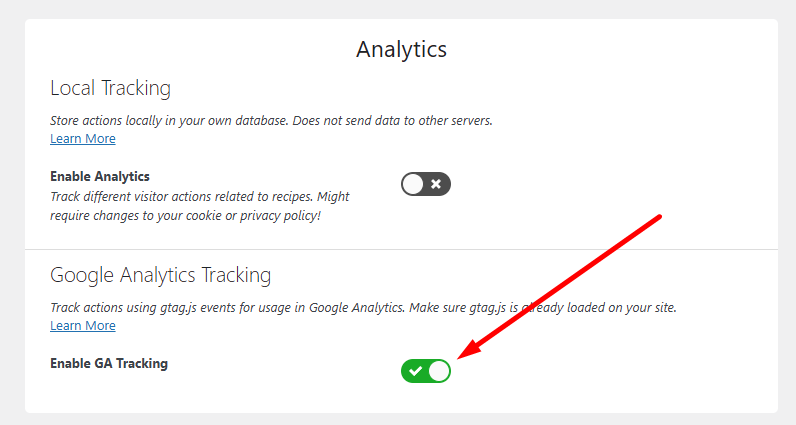
👉 How? Our favorite free tools at The Foodie HQ are Microsoft Clarity and GA4 Analytics in WP Recipe Maker. It’s important to note that there are two settings for analytics tracking in WPRM, local and GA4. Local stores analytic data on your server. I’m not the biggest fan of this because this is limited because your server can only store so much data before it gets bogged down. So, just go with GA4 and you’re good.
10. Revisit Old Content
- Audit older posts that duplicate recipe card content.
- Revise and trim excess while adding process photos if possible.
- Improve internal linking to related posts to keep users on-site.
👉 Why? You probably have a ton of content that needs a fresh coat of paint. Updating old posts can give you quick wins—clean up, optimize, and add new value to stuff already ranking (or stuff that was ranking and could again).
Remember, these changes aren’t just about surviving algorithm updates—they’re about building a sustainable, user-focused food blog that serves your audience well. The most successful food blogs are those that balance both user experience and monetization effectively. As you implement these changes, monitor your metrics closely and be prepared to adjust your strategy based on what works best for your specific audience.
👉 TL;DR: Give your old posts a glow-up. Google loves a good comeback story.